


Running a limo, party bus or charter fleet means carrying the cost of every vehicle, every driver, every policy and every quiet Tuesday. Commercial auto premiums have risen for 59 quarters in a row, diesel passed $6 a gallon this fall, and good drivers are hard to find and harder to keep. Our founder was an operator before building the broker side, so we know who carries the real weight of this industry: you.
On this page
From the curb, a limo business looks simple: a polished car, a chauffeur in a suit, a happy couple in the back seat. From the inside, it is a business that never switches off. Every vehicle carries a loan, a policy and a service schedule. Every chauffeur needs a license, a background check and a schedule that adds up. Fuel moves whenever it likes, and the insurance renewal only ever moves one way. This article is about that side of the business: what it really costs to run limos, party buses, Sprinters, coaches, SUVs and wedding cars, and the responsibility that rides along on every booking. We wrote it because we have been there.
The real cost of running a fleet at a glance
| Cost | What drives it | Why it keeps rising |
|---|---|---|
| Vehicles | Purchase, conversion, financing | Higher interest rates, specialist parts |
| Insurance | Seats, miles, claims, limits | Commercial auto premiums up 59 quarters in a row |
| Drivers and chauffeurs | Licensing, testing, pay, training | Too few qualified drivers |
| Fuel | Big engines, idling, dead miles | Diesel above $6 a gallon this fall |
| Maintenance | Inspections, tires, interiors, downtime | Vehicles worked hard on peak weekends |
| Compliance | Federal and state rules, permits, airport fees | Rules and fees are added, rarely removed |
| Payments and marketing | Card fees, chargebacks, ads, software | Every booking pays a share before you do |
| The empty days | Fixed costs on a quiet Tuesday | Peaks are short, costs run all year |
Every vehicle is a business of its own
No two vehicles in a fleet cost the same to keep on the road. Here is what each one asks of the people who own it.


The stretch limo
A stretch is a converted car, so the conversion, the long wheelbase and the custom interior all cost more to keep right than the car it started as. And its year is made in a handful of weekends: prom, wedding season and New Year's Eve.
What it asks of you: specialist repairs, a full calendar in spring and a plan for the quiet months.

The party bus
Interiors take a beating: lights, sound systems, seats and floors after every Saturday night. Once a bus is built to carry 16 or more people including the driver, that driver needs a commercial license with a passenger endorsement, which narrows the pool of people you can hire.
What it asks of you: CDL drivers, constant cleaning and repairs, and nerves of steel on prom night.


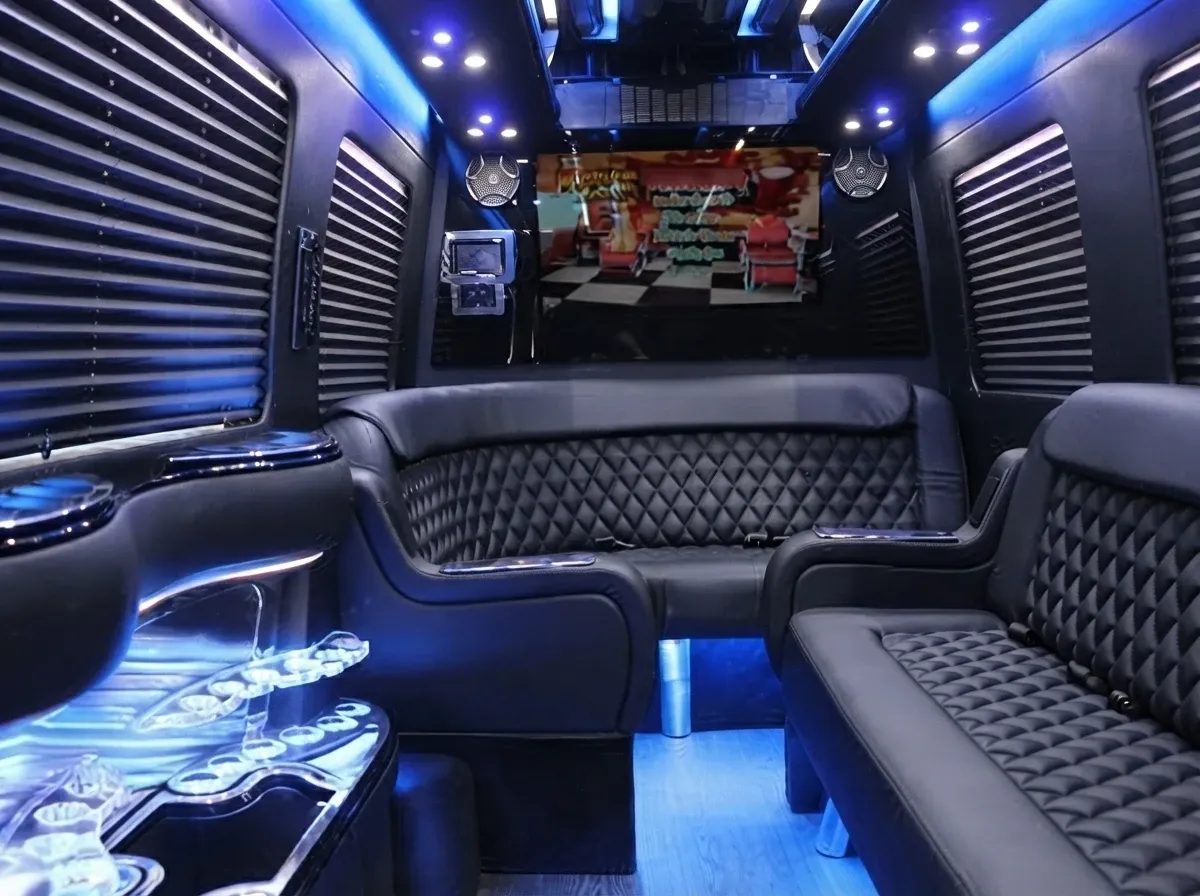
The Sprinter
Groups love the Sprinter, and it is also one of the most expensive vehicles to put on the road. A new 2026 Sprinter passenger van starts at close to $57,000 before a single seat is changed, and a limo or executive conversion adds a lot more.
What it asks of you: a big loan, diesel at today's prices and a vehicle that works seven days a week to pay for itself.

The motor coach
A new motor coach can cost well over half a million dollars. Every one needs a CDL driver with a passenger endorsement, drug and alcohol testing, an annual inspection and federal-level insurance, and its tires alone are a serious line in the budget.
What it asks of you: the biggest capital cost in the industry and the strictest rules.

The black SUV
Black car work is a mileage business: airport runs, corporate days and dead miles back to base. Many airports charge a fee on every trip, too: San Diego International, for example, charges limousines a fee per trip that rises with the number of seats.
What it asks of you: high mileage, fast depreciation and a driver who is never late.


The classic wedding car
A 1950s Rolls-Royce needs a specialist mechanic, parts that can take weeks to find, a dry garage and a backup plan for rain. It earns its money in a short wedding season, and one breakdown on a Saturday can cost far more than the repair.
What it asks of you: patience, specialist knowledge and a reputation riding on a car older than most of your customers.
Insurance: the bill that only goes one way
For interstate for-hire passenger carriers, federal rules set minimum liability cover at $1.5 million for vehicles seating 15 or fewer, including the driver, and $5 million for 16 or more. States add their own rules on top: in California, for example, charter-party carriers file proof of insurance with the state, with minimums that rise with seat count, and a lapse can lead to suspension.
The market has not been kind. Commercial auto premiums rose for the 59th quarter in a row in the first quarter of 2026, according to the Council of Insurance Agents & Brokers, the biggest increase of any line, even as overall commercial premiums fell. AM Best reports that commercial auto insurers lost money on underwriting for 14 straight years through 2024, as claim costs grew faster than inflation and jury awards of $10 million or more pushed past standard limits into umbrella cover. For an operator, that means rising renewals even with a clean record, and a single claim that can change your premium for years.
Drivers and chauffeurs: the product people remember
Customers rarely remember the vehicle's model year. They remember the chauffeur. Finding, licensing and keeping good ones is one of the hardest parts of the job.
- Licensing: a vehicle designed to carry 16 or more people, including the driver, needs a driver with a commercial license and a passenger endorsement, and interstate drivers need a medical exam at least every two years.
- Testing: CDL drivers fall under federal drug and alcohol testing, including random tests, and even a one-driver company has to be part of a random testing program.
- Hours: a passenger-carrying driver may drive no more than 10 hours after 8 hours off, may not drive after the 15th hour on duty, and has weekly limits of 60 or 70 hours. A wedding that runs late is a scheduling problem, not just a long night.
- Pay and supply: the median pay for transit and intercity bus drivers was $59,050 in May 2025, according to the Bureau of Labor Statistics, and an American Bus Association Foundation study found about a fifth of the demand for bus drivers going unfilled.
Then there are the background checks, the training, the uniforms, the overtime and the chauffeur who calls in sick on a Saturday in May.
Fuel: big engines, long waits and dead miles
Limos, party buses and coaches were never built for fuel economy. The US Energy Information Administration's weekly average for diesel passed $6 a gallon in early November 2026, above the record set in June 2022. In the second week of November it was about $2.29 higher than a year earlier, and it was still around $5.94 in mid-November. Add the engine running for heat or air conditioning while guests are inside a venue, and the empty miles to and from the garage and the airport, and fuel can turn a good month into a break-even one.
Maintenance, inspections and the vehicle that can't go out
Every commercial vehicle must pass a periodic inspection at least once every 12 months, with proof on the vehicle, and good operators check far more often than that. Brakes, tires, lighting, air conditioning and the electrics behind every party light all wear fastest exactly when demand is highest. And a vehicle off the road in May is not just a repair bill: it is the bookings you turn away while it sits in the shop.
Paperwork that never stops
Federal registration for interstate work, state permits, city business licenses, airport permits and per-trip fees, workers' compensation, safety inspections and driver files: the rules differ by state and city, they change, and the operator is the one who has to keep up. In California alone, a charter-party carrier needs its state permit, insurance on file with the state, a Highway Patrol safety inspection and a drug and alcohol testing program.
Money in, money out
- Card fees: the average Visa and Mastercard credit card interchange fee was about 2.36% in 2025, according to the Nilson Report, before your processor adds its own share.
- Financing: the Federal Reserve raised rates again in September 2026, so the vehicle you finance this year costs more to carry than the one you bought a few years ago.
- Cancellations and chargebacks: a canceled Saturday in June is a lost Saturday, and a disputed charge can arrive months after the job is done.
- The empty days: loans, insurance, rent and wages run every day of the year, while the busiest dates are a handful of weekends. It is the reason minimum hours exist, and we explain it to customers in why limos have minimum hours.
The 2 a.m. phone call
Then there is the part no spreadsheet shows. You are responsible for the safety of every passenger, on the most important day of a bride's life, the first prom of a teenager or the client trip that decides someone's quarter. You are the one who gets the call when a vehicle breaks down on the highway, when a group damages a bus, when a flight lands three hours late or when a driver gets sick an hour before pickup. You find the backup vehicle at midnight, you answer the review, you pay the deductible. Your customers are having the most important day of theirs, so you never get to have an off day.
We started on your side of the desk
When we sign up new operators who don't know us yet, some expect a broker who has never turned a wrench, filled a tank or answered that 2 a.m. call. We understand the doubt, but RentX didn't start with a website. Before there was a broker business, our founder was an operator, running limousines and luxury cars in the UK. The broker side came later, and the team behind RentX spent over 20 years as the UK's biggest transport broker before bringing RentX to the US. The costs and headaches in this article aren't theory to us. We have paid them.
So, to every operator keeping a fleet on the road through rising premiums, record fuel prices and a shortage of drivers: we see the work it takes, and we respect it. Nothing we do works without you.
And the broker side? Hard work of a different kind
A broker doesn't own the vehicles, and we never pretend otherwise. But bringing in the customer is its own fight:
- Competing with the whole market: every search for a limo or a party bus is an auction against every operator, every other broker and every listing site, and the advertising bill arrives whether the lead books or not.
- Answering at all hours: questions, quotes and changes arrive at night and on weekends, and most quotes never turn into a booking.
- Standing behind the booking: checking payments, screening for fraud and putting things right when a day doesn't go to plan.
A broker and an operator do completely different jobs, but they go hand in hand: the broker finds the customer and the operator delivers the day. Neither works without the other. We wrote about how we earn that trust in Building Trust as a Broker, and about what RentX is in What is RentX?.
What we try to take off your plate
We can't lower your insurance or your fuel bill. What we can do is bring you confirmed bookings from customers you would never reach on your own, and pay on time for the work. Joining is free, your prices are yours, and you only take the work that fits. Our Smart Fleet tool reads your website and finds the vehicles you have already published, and the RentX Partner app keeps your bookings, availability and payouts in one place. Read why busy isn't full, or apply to join RentX.
Customers book limos, party buses, Sprinters, minibuses, charter buses, black car service and wedding cars through RentX, and every one of those rides is delivered by an operator like you.
Know an operator who needs to read this?
If this sounds like your week, share it with the people who run the dispatch board, turn the wrenches and answer the late-night calls. They have earned it.
Frequently asked questions
What are the biggest costs of running a limo or party bus business?
The vehicles and their financing, insurance, drivers, fuel and maintenance, followed by compliance, card fees and marketing. Most of them run every day of the year, while the busiest dates are a handful of weekends.
Do party bus drivers need a CDL?
If the vehicle is designed to carry 16 or more people including the driver, yes: a commercial driver's license with a passenger endorsement, plus federal drug and alcohol testing.
How much insurance does a limo company need?
For interstate for-hire passenger work, the federal minimum is $1.5 million for vehicles seating 15 or fewer, including the driver, and $5 million for 16 or more. Many states set their own minimums, and many operators carry more.
Why do commercial auto insurance premiums keep rising?
Claim costs and large jury awards have grown faster than inflation for years. Commercial auto premiums rose for the 59th quarter in a row in early 2026, according to the Council of Insurance Agents & Brokers.
Does a broker really understand an operator's costs?
Ours does. RentX's founder was an operator, running limousines and luxury cars, before building the broker side.
How does RentX work with operators?
We send confirmed bookings in your area and pay on time for the work. Joining is free, and you only take the work you want. See why operators partner with RentX.


